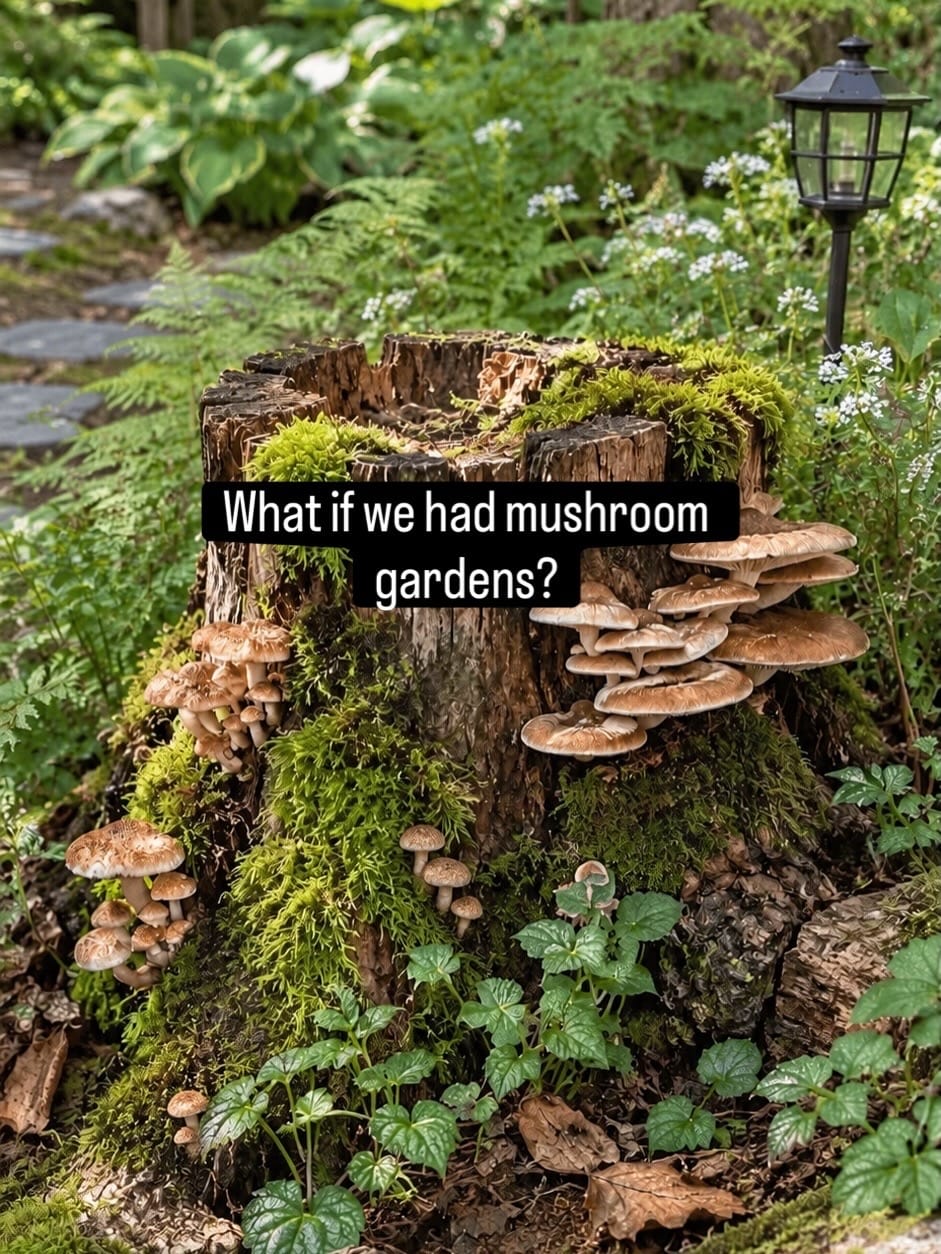
Recently, I found myself asking a simple question: why don’t we have mushroom gardens?
We have rose gardens, fern collections, succulent houses, tropical greenhouses, and moss gardens. Yet fungi — an entire kingdom of life — are still largely absent from designed landscapes.
We tend to encounter mushrooms accidentally: on a forest walk, after rain, beneath old trees, or on decaying wood. But what if we designed landscapes where fungi were not incidental, but intentional?
A mushroom garden does not have to be a mushroom farm or a sealed laboratory. Many fungi can be cultivated outdoors by creating the right conditions: shade, moisture, deadwood, wood chips, suitable substrates, host trees, and carefully managed microclimates.
For a garden designer, this introduces a completely different design language.
Instead of working only with color, form, texture, height, and flowering season, we begin thinking about decomposition, substrate, humidity, canopy cover, host relationships, temperature, and seasonal fruiting.
The visible mushroom is only one brief stage in a much larger system. Beneath the surface, mycelium is constantly colonizing, decomposing, exchanging nutrients, and interacting with plants and soil.
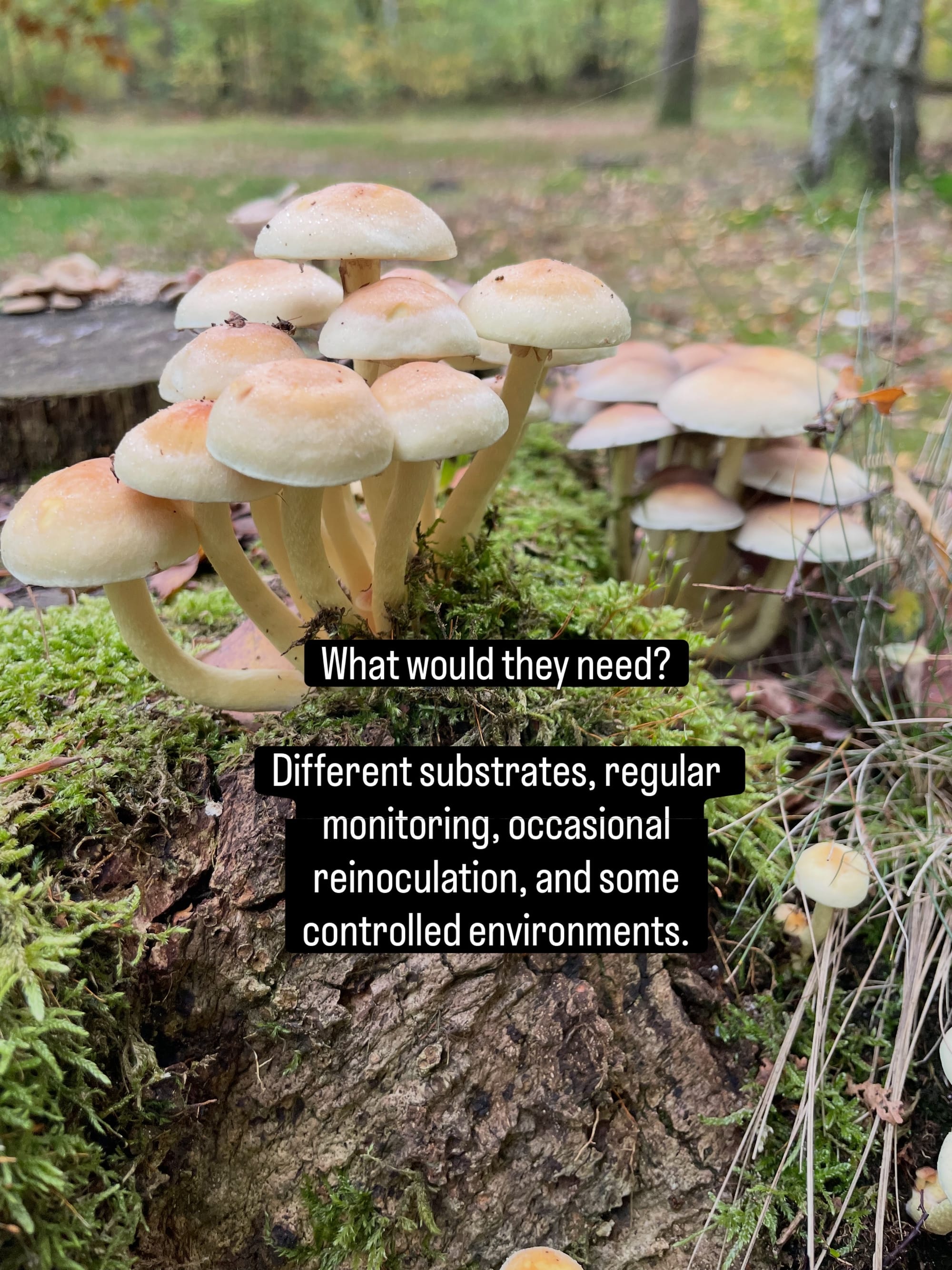
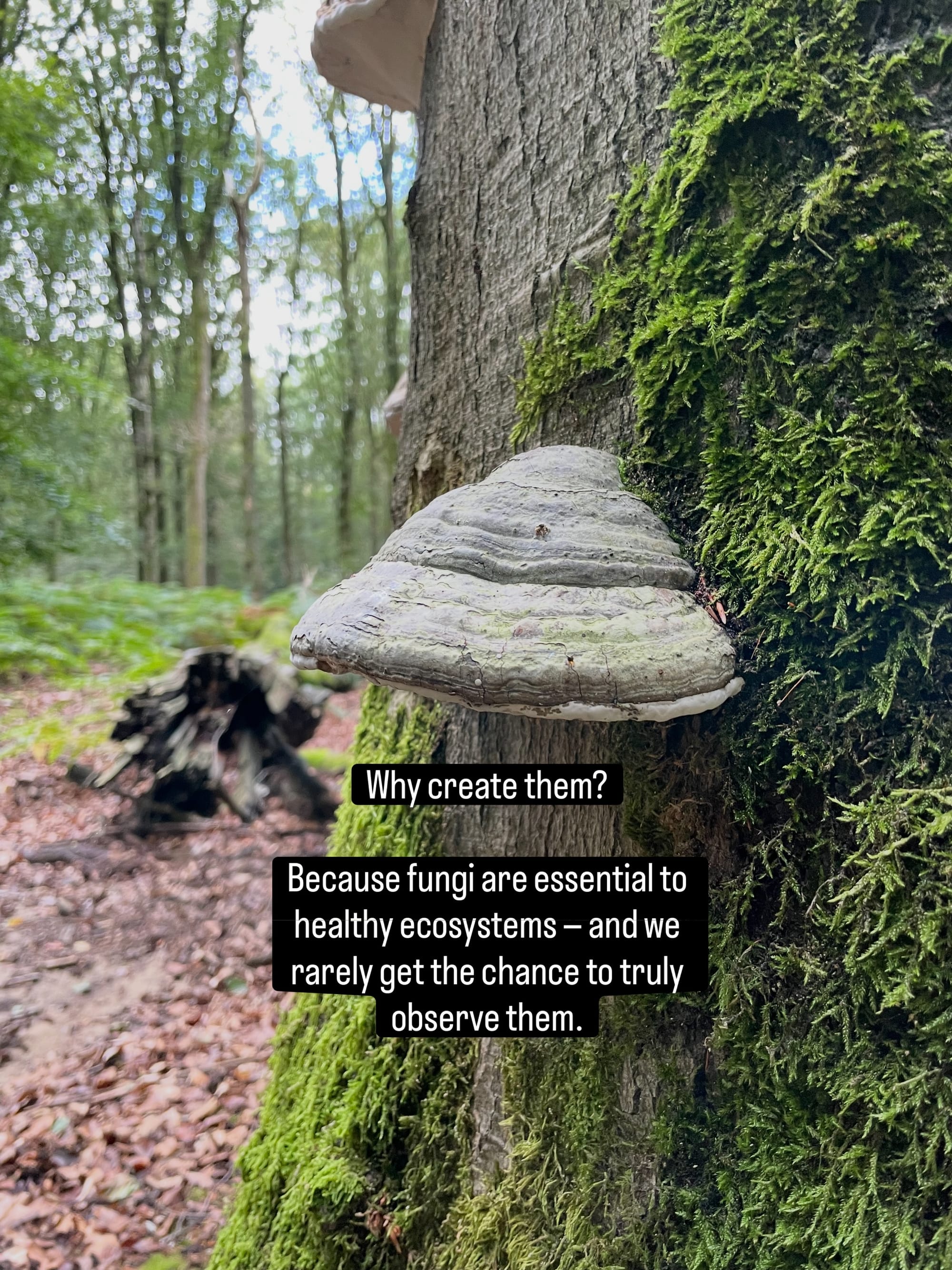
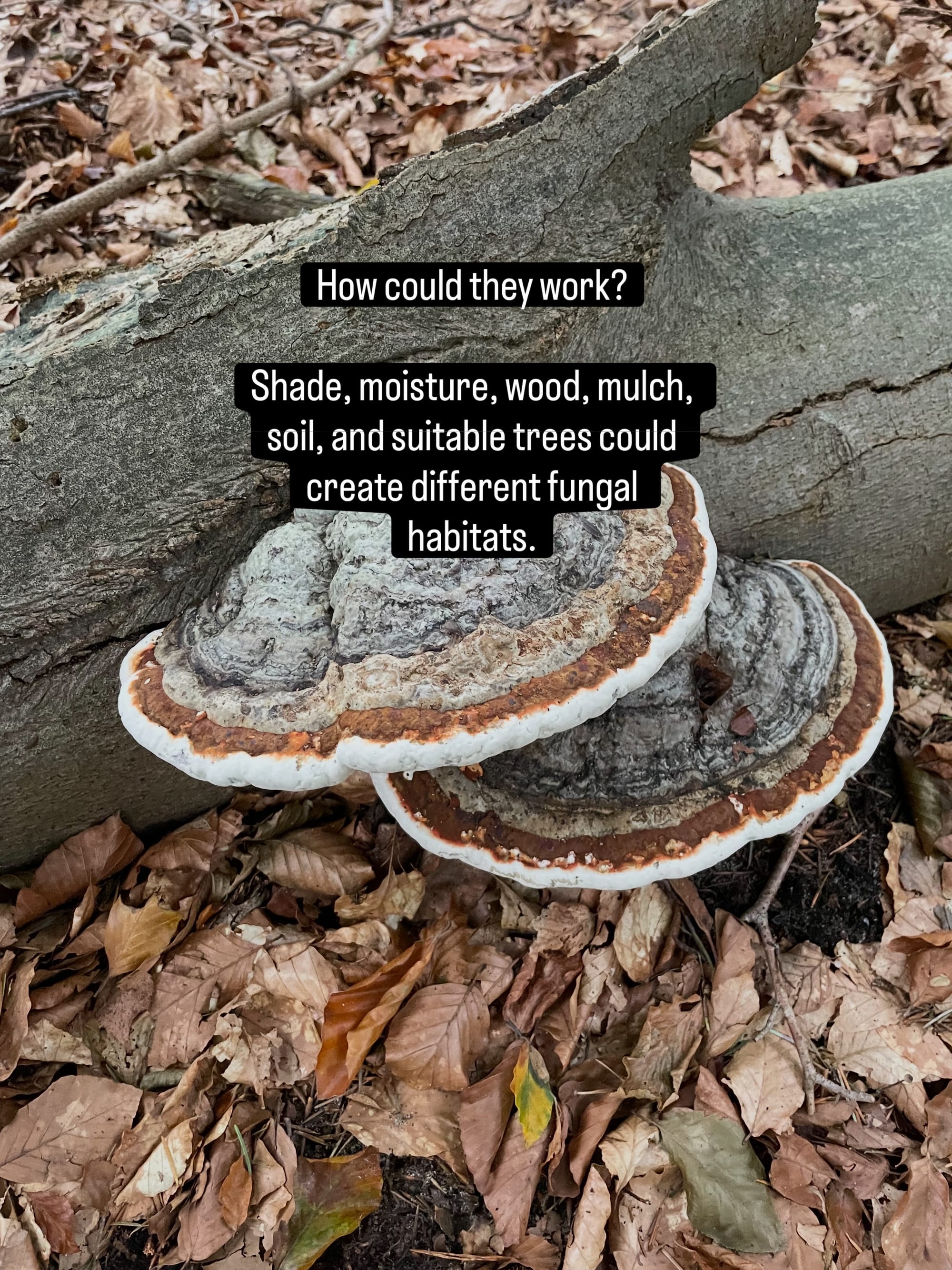
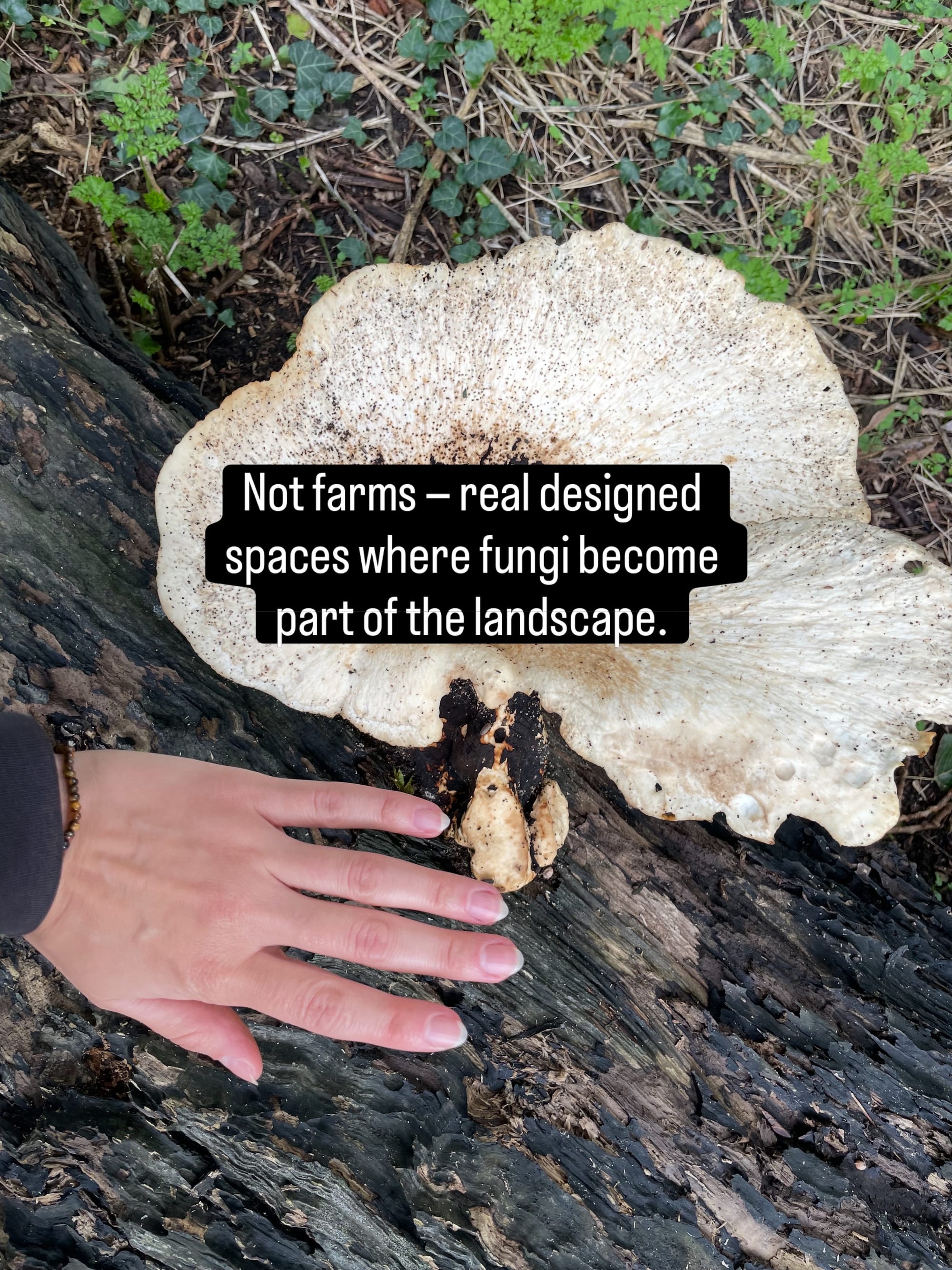
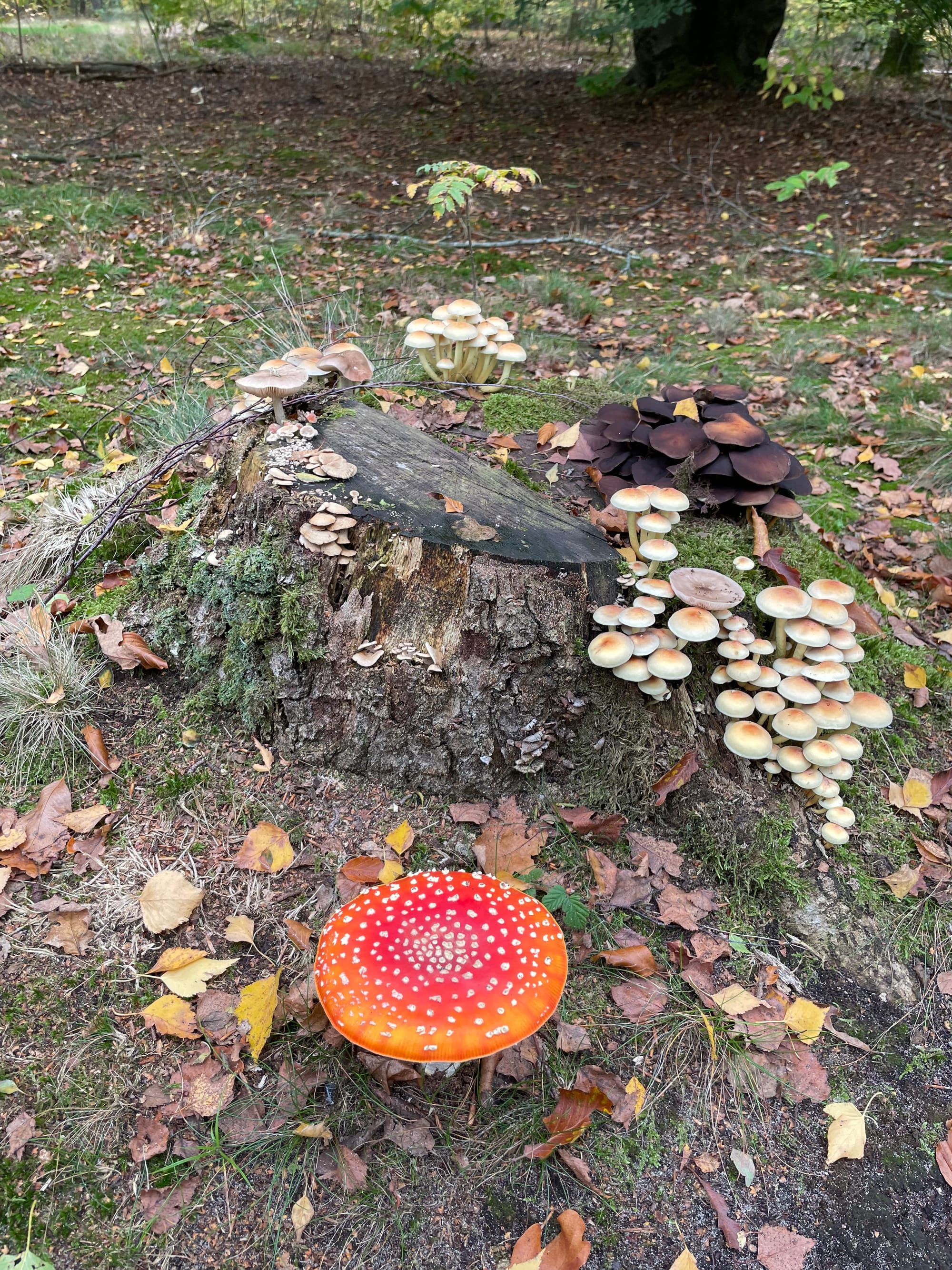
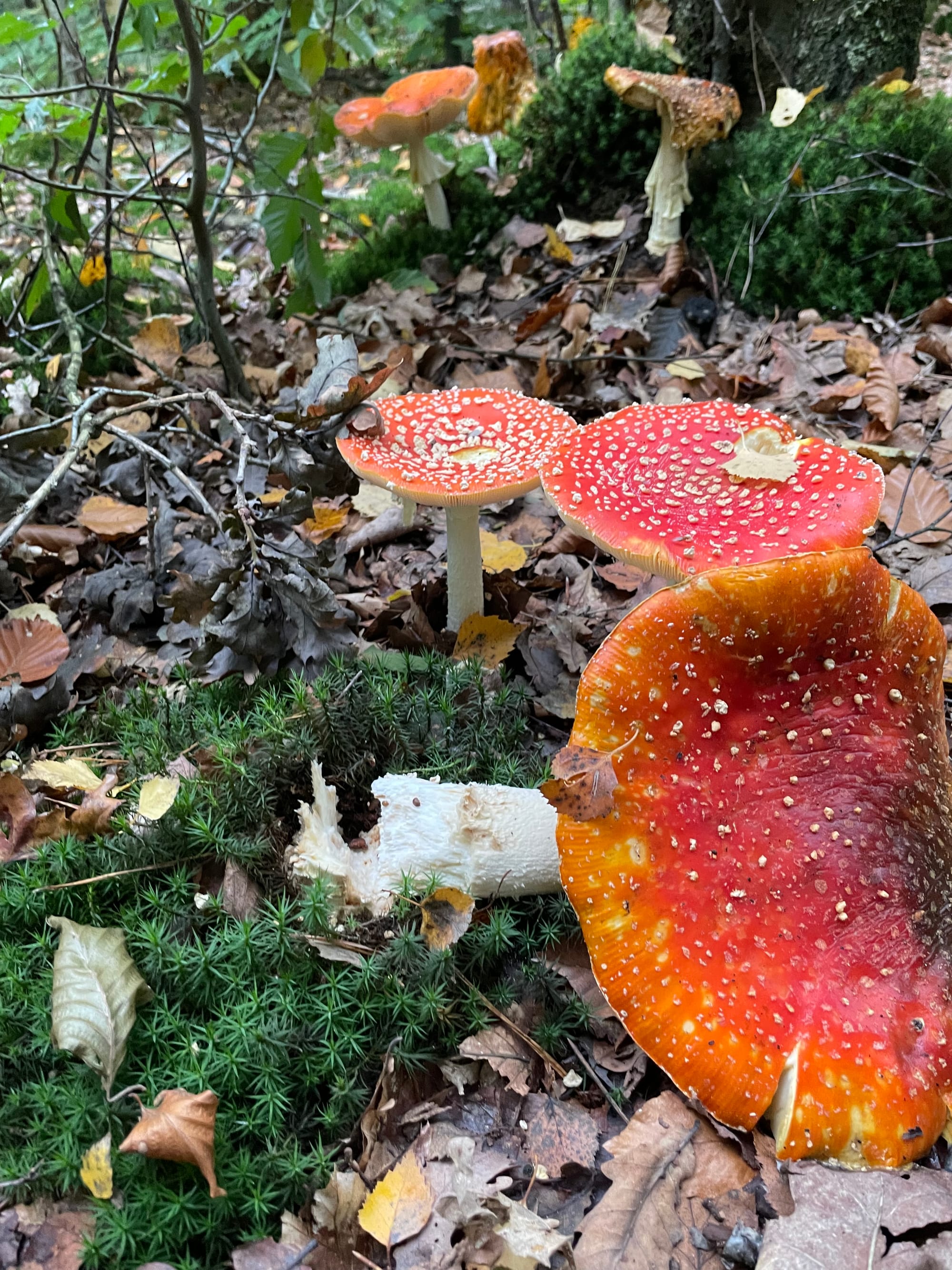
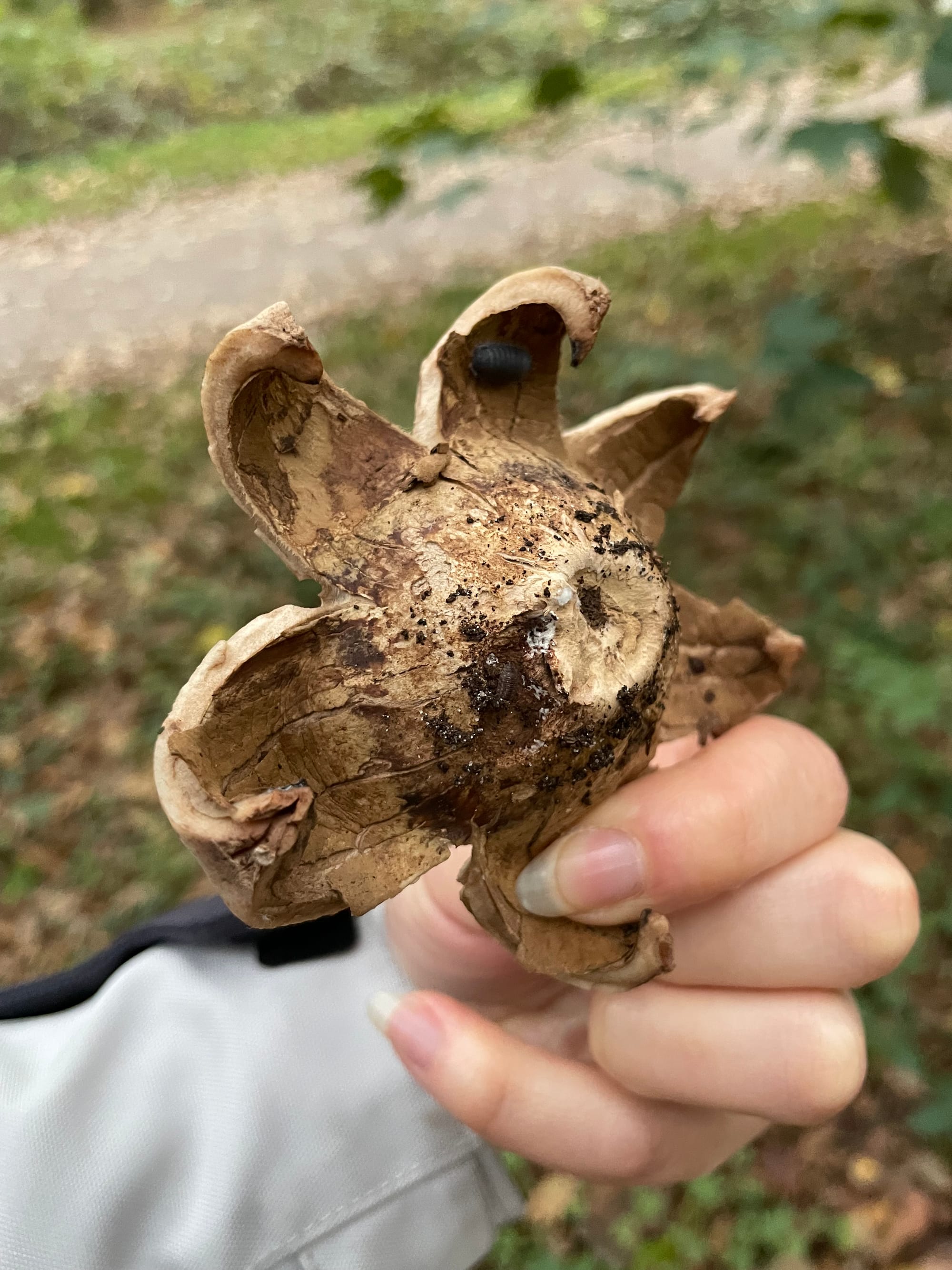
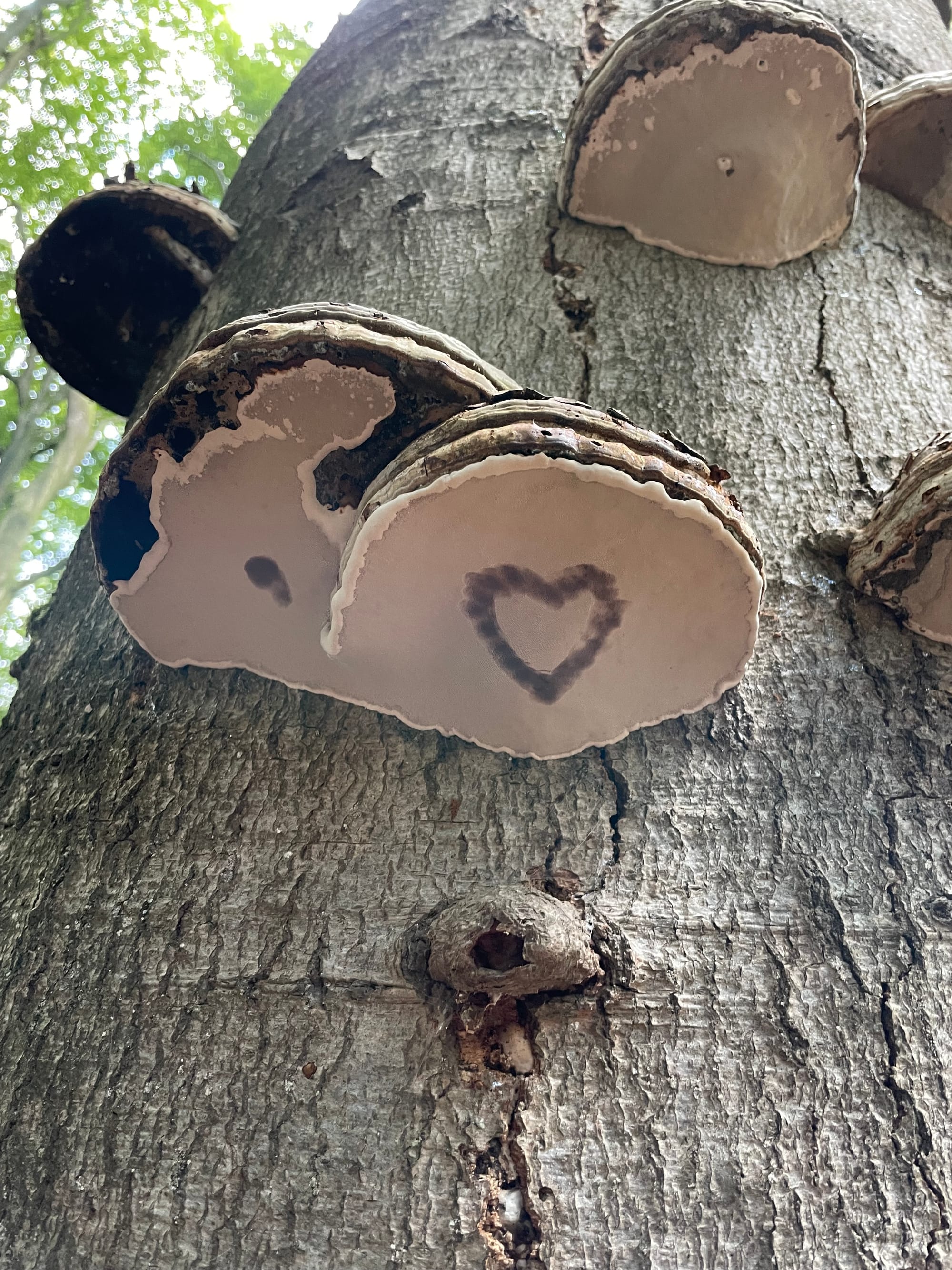
That makes a mushroom garden particularly interesting from an educational perspective. It could reveal processes that are usually hidden: mycelium spreading through wood, primordia forming, fruiting bodies emerging, spores being released, organic matter breaking down, and nutrients gradually returning to the soil.
Some fungi could be integrated directly into the outdoor landscape through inoculated logs, wood-chip beds, deadwood, and relationships with specific trees and shrubs. Other species could be shown in controlled microhabitats where humidity, airflow, temperature, and spore distribution can be managed more precisely.
The result could be something between a garden, an ecological exhibition, and a living laboratory.
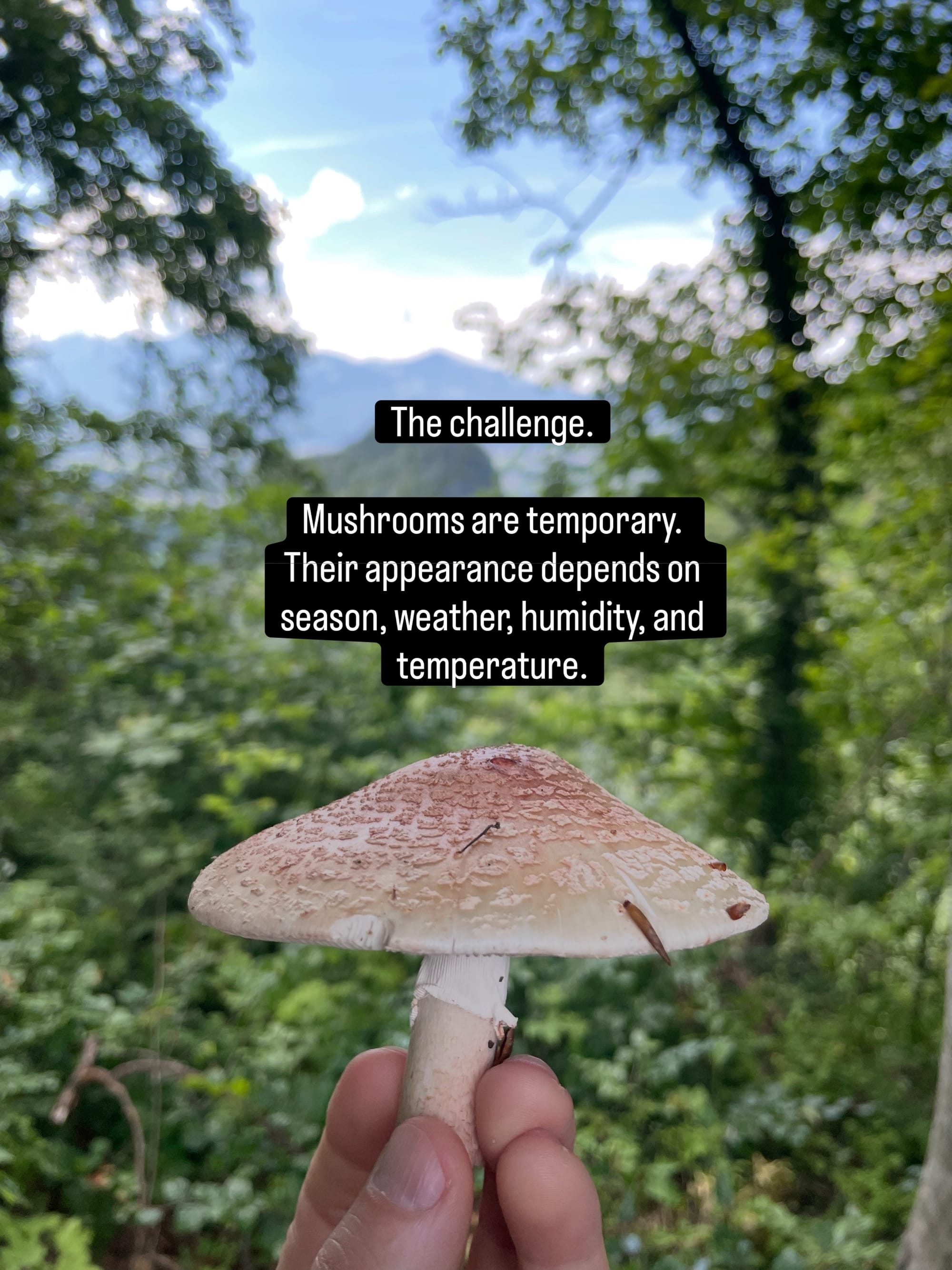
Of course, there are challenges. Mushrooms are temporary. Fruiting depends on season, weather, temperature, humidity, and species. Different fungi require different substrates and environmental conditions. Some areas would need monitoring, rotation, and periodic reinoculation.
But gardens are already built around change.
We do not expect roses to flower all year. We accept that bulbs emerge and disappear, leaves fall, perennials retreat, and landscapes shift with the seasons. A mushroom garden could embrace that same principle — with different fungi appearing at different times and the changing conditions becoming part of the experience.
For me, that is where the idea becomes especially compelling.
A mushroom garden would not simply be a collection of unusual species. It could be a designed ecosystem that helps people understand how forests, soils, plants, decay, and regeneration are connected.
As a garden designer, I am interested in landscapes that do more than look beautiful. I want them to reveal something, to make people notice processes they would otherwise overlook, and to encourage curiosity about how living systems actually work.
Perhaps the mushroom garden of the future will not look like a conventional garden at all.
Perhaps it will be a landscape where an entire hidden kingdom finally becomes visible.