Amsterdam is a beautiful city, but many of its homes have the same problem: too much stone and not enough soil. Narrow sidewalks, paved backyards, hard roof surfaces, and small balconies all contribute to heat and water runoff, as well as a rather grey daily view.
The good news is that the city offers practical support to residents who want to add more green spaces. Some options are modest, such as a facade garden. Others are more substantial, such as subsidies for removing paving or installing a green roof. When used well, these programs can help fund a more beautiful, climate-conscious garden. Used poorly, however, they result in a few pots and a patch of struggling plants, creating more maintenance than anyone wanted.
As a garden designer, I see subsidies as a useful starting point, not the design itself. The real value comes when financial support is combined with a clear layout, appropriate plantings, suitable materials, and a garden that suits your lifestyle.
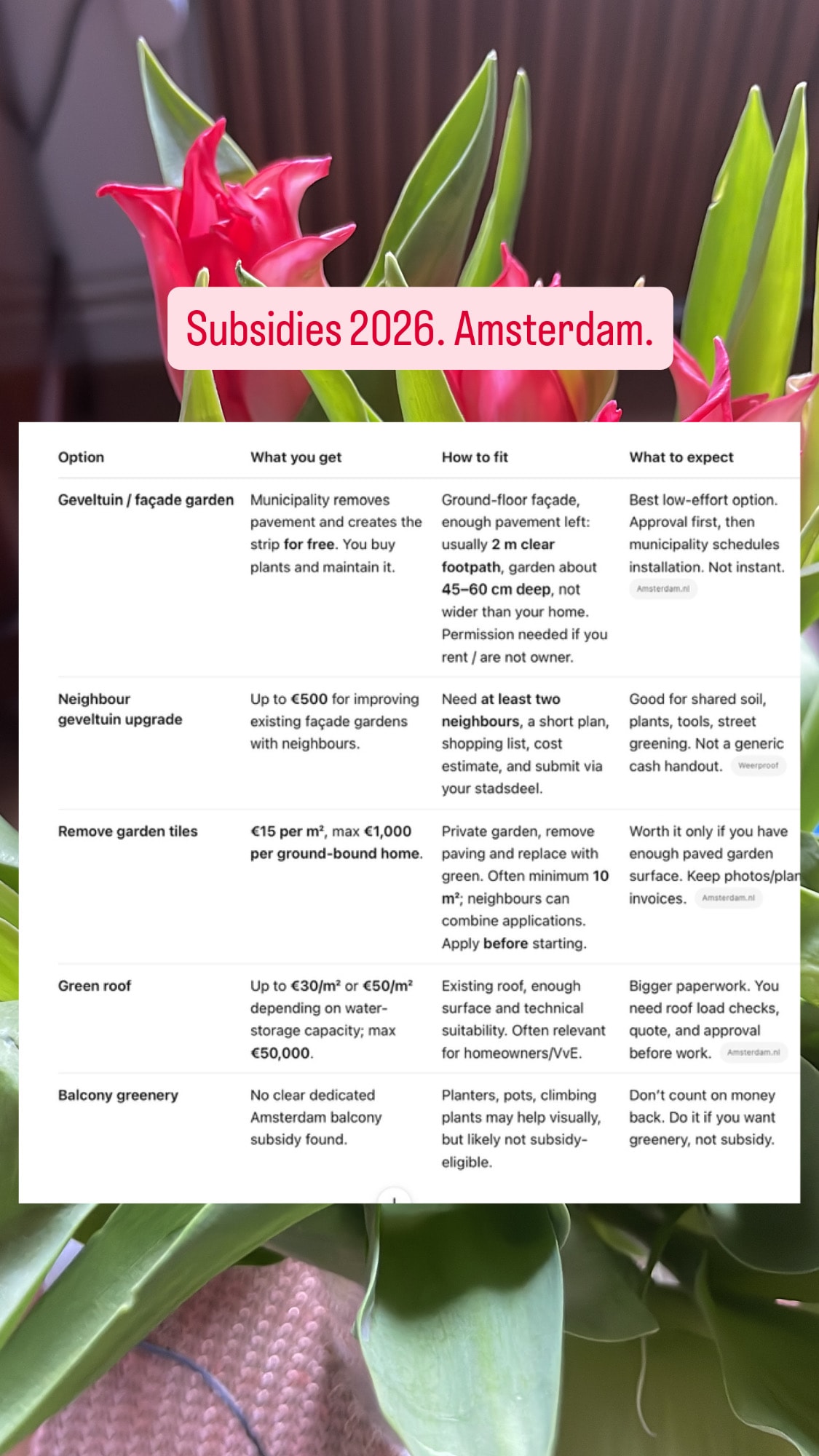
The easiest first step: a façade garden
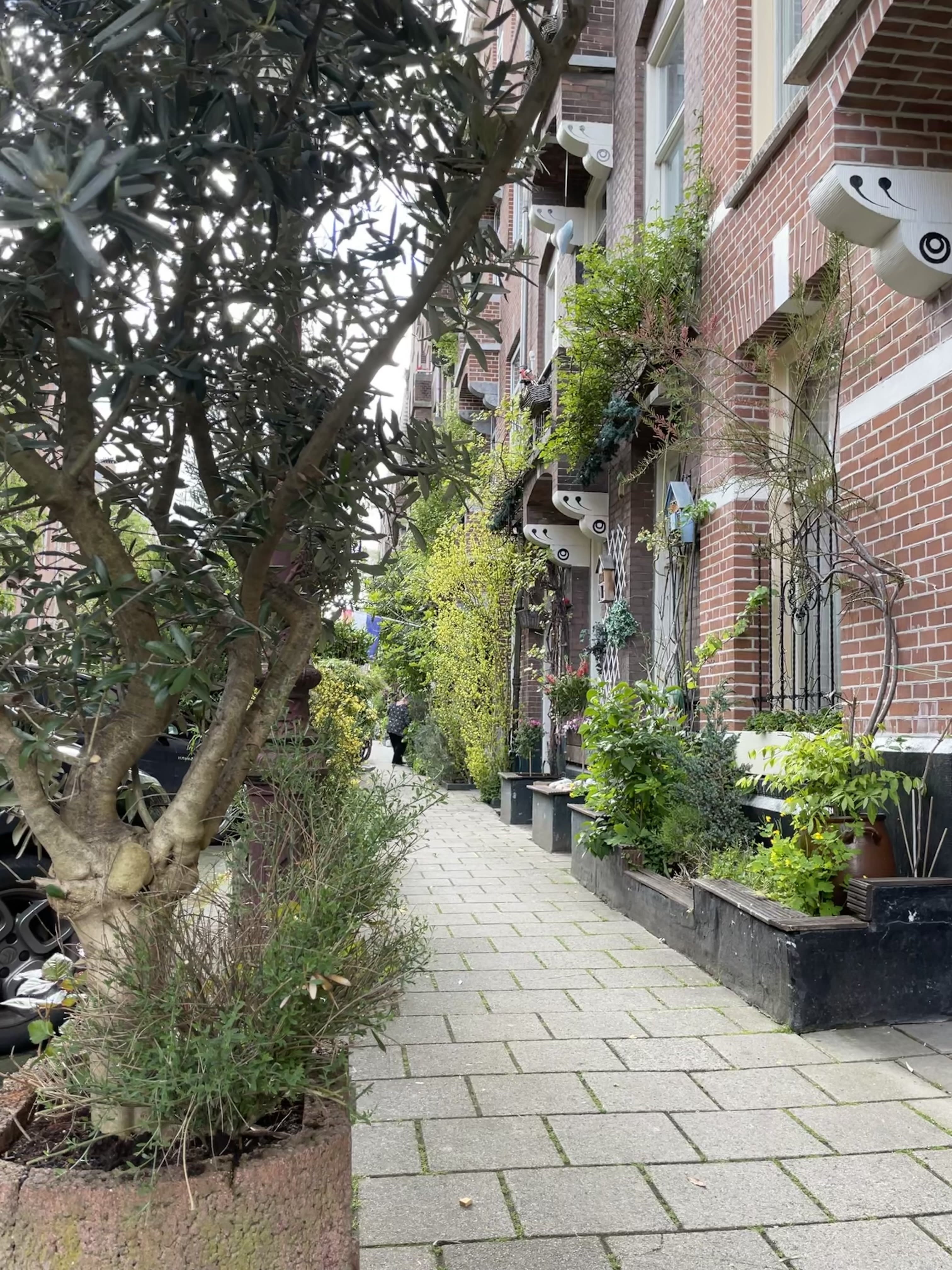
A façade garden, also known as a geveltuin, is one of the simplest ways to beautify an Amsterdam street. It is a narrow strip of plants directly in front of a house.
In Amsterdam, the municipality can create the planting strip for free if the location meets certain conditions. The city will remove part of the pavement and prepare the space. You will arrange the plants and be responsible for maintenance afterwards. The garden must typically be within the width of your home, around 45–60 cm deep, and leave approximately 2 meters of clear pavement for pedestrians.
Although that may sound small, a well-designed façade garden can be surprisingly effective.
For a refined look, I would avoid random bedding plants and choose a restrained palette: perhaps evergreen structure with seasonal detail. Think Geranium ‘Rozanne’, Nepeta, Alchemilla mollis, Helleborus, compact ferns, Sarcococca, or shade-tolerant grasses where light is limited. Against a sunny brick façade, Mediterranean-style planting can work beautifully: Salvia, Lavandula, Stipa tenuissima, Erigeron karvinskianus and small climbing roses, if there is enough support and maintenance.
The mistake is treating a façade garden as an afterthought. It should be designed as a miniature border.
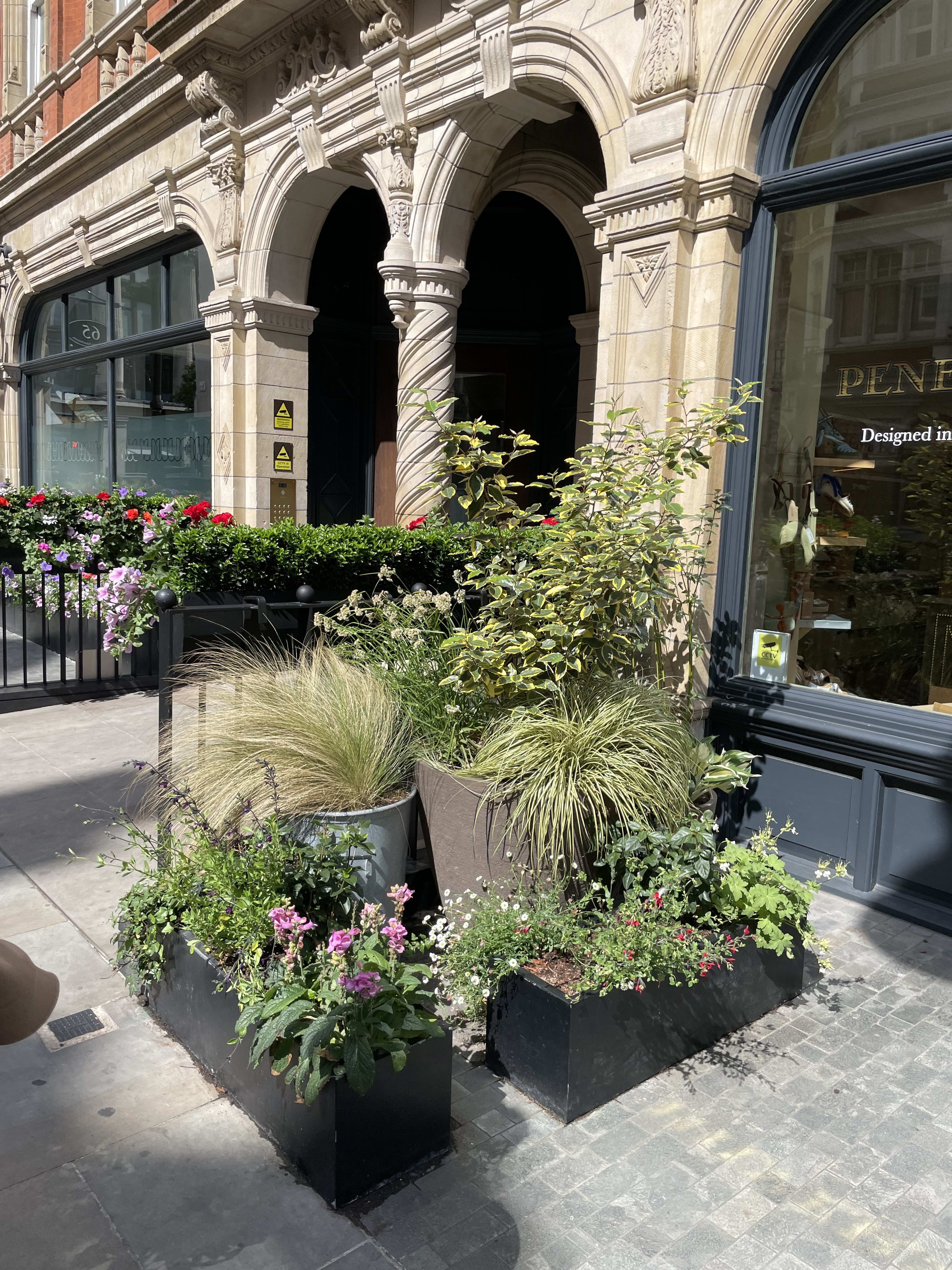
Greening your street with neighbours
If several homes on a street want to improve their facade gardens together, they may receive additional support. Amsterdam Weerproof outlines a program through which residents can receive up to €500 to improve their existing facade gardens with their neighbors. The process requires at least two neighbors, a short plan, a shopping list, and an estimated budget, all of which must be submitted through the relevant district route.
This is where design discipline matters.
A street with ten completely different tiny gardens can look lively, but also messy. A street with a shared rhythm looks intentional. For example:
- repeating the same evergreen base plant every few houses;
- using a limited flower palette in two or three colours;
- choosing climbers only where they will not damage façades;
- leaving enough visual breathing space around entrances;
- using plants that can tolerate dogs, bicycles, wind and dry soil.
In Amsterdam streets, robustness is not optional. The planting must cope with reflected heat, compacted soil, irregular watering and the occasional careless footstep.
Removing tiles from your garden
The subsidy for removing tiles can be more relevant for homeowners with a paved back garden. The Groen in Amsterdam subsidy program in Amsterdam can contribute up to €15 per square meter for removing garden paving, with a maximum of €1,000 per home.
This is not just an ecological gesture. It can also dramatically improve a garden's atmosphere.
A fully paved garden often feels hot, flat, and acoustically hard. By removing some of the paving, you can create planting beds, improve drainage, and establish a more comfortable microclimate. The best results usually come from partial removal rather than complete removal.
A practical layout might include:
- a generous terrace close to the kitchen or living room;
- planted borders along the boundaries;
- a gravel or clay-paver path through the garden;
- a small tree for shade and height;
- permeable surfaces instead of large concrete slabs;
- storage screened with evergreen planting.
For Amsterdam gardens, I often favour materials that age well: clay pavers, reclaimed bricks, gravel, timber, steel edging and natural stone used sparingly. They suit the architecture better than shiny porcelain tiles laid wall to wall.
Green roofs: useful, but not always simple
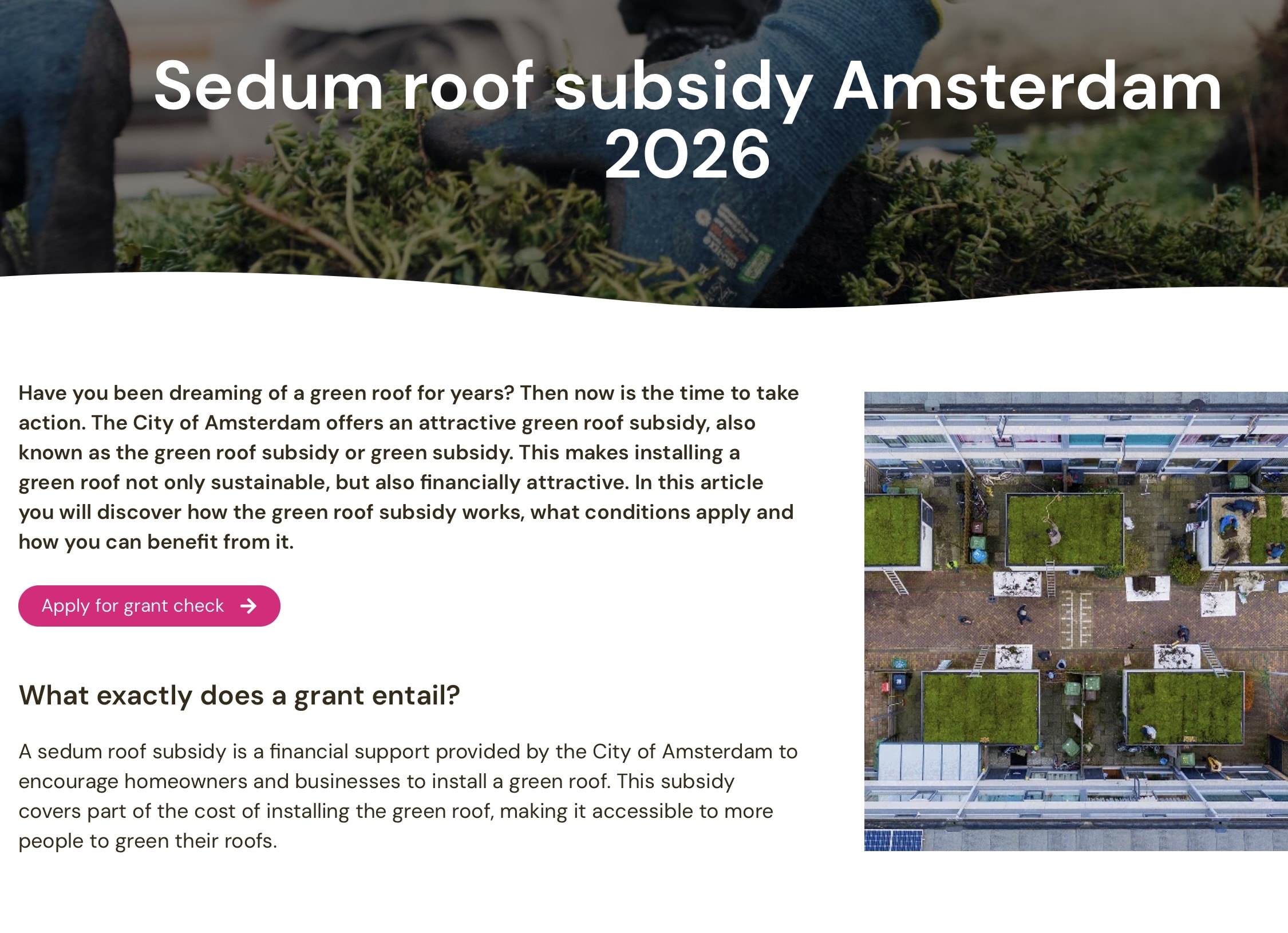
Green roofs are another subsidised option. Amsterdam offers support for green roofs, and subsidy levels depend partly on water storage capacity. The municipal program provides subsidies of up to €30 per square meter for roofs that can store 30–50 liters per square meter and up to €50 per square meter for roofs that can store more than 50 liters per square meter, with a maximum subsidy of €50,000.
This can be ideal for extensions, sheds, garages, and larger flat roofs. However, it must be done properly.
A green roof is more than just a roll of sedum placed on top of a building. You need to consider the roof's load capacity, waterproofing, drainage, access, maintenance, and the view from upstairs windows. A roof you look down on daily deserves more consideration than a purely functional sedum mat.
Where possible, I prefer biodiverse roofs with varied textures, such as sedum, herbs, grasses, and small flowering perennials. These roofs offer more seasonal interest and ecological value than a flat green carpet. However, they also require the proper build-up depth and a realistic maintenance plan.
What about balconies?
Balcony greenery is valuable, yet it doesn't seem that there's a clear, dedicated Amsterdam subsidy for balcony plants or planters. This does not diminish the importance of balconies; it simply means they should be designed for beauty and functionality rather than reimbursement.
Good balcony planting requires addressing four issues: wind, weight, drainage, and privacy.
For a sheltered balcony, planters with Trachelospermum jasminoides, Pittosporum, compact grasses, herbs and seasonal bulbs can work well. For exposed balconies, choose tougher plants: Pinus mugo, Juniperus, Calamagrostis, Sedum, Thymus, Lavandula and hardy evergreen shrubs in substantial containers.
Small balconies benefit from fewer, larger containers rather than many small pots. It looks calmer and the plants survive better.
Common mistakes to avoid
Applying for subsidies before having a design
Although a subsidy can influence the budget, it should not dictate the entire design of the garden. Begin by planning the layout, considering where you want to sit, where you want water to go, where privacy is needed, where the sun falls, and what you want to see from inside the house.
Removing paving without improving the soil
The soil in Amsterdam gardens can be compacted, poor, or full of rubble. If you remove tiles and plant directly into poor soil, you will be disappointed with the results. Soil improvement may not be glamorous, but it makes all the difference between a garden that thrives and one that struggles.
Choosing plants for the garden centre, not the garden
Plants should be selected for light, soil, exposure, scale and maintenance. A shady Amsterdam courtyard needs a different palette from a sunny south-facing roof terrace.
Forgetting winter
A garden should not disappear in November. Use structure: evergreen shrubs, clipped forms, grasses, multi-stem trees, seedheads, bark and good hard landscaping. Spring bulbs and summer flowers are additions, not the backbone.
Underestimating maintenance
"Low-maintenance" does not mean "no maintenance." Good design reduces unnecessary work by using the right plants in the right places, creating clear edging, installing sensible irrigation systems, and designing a planting scheme that matures well.
My perspective on subsidies
Although subsidies are useful, they are not a design strategy.
The strongest gardens aren't created by pursuing every available program. They are created by making intelligent decisions about where to keep hard surfaces, where to expose soil, how to frame views, how to manage water, and how to develop a planting palette that suits the house and its inhabitants.
For some homes, the best first step is adding a façade garden. For others, it may be removing 20 square meters of paving and creating deep borders. For a VvE or larger property, a green roof may be the most logical investment. The right answer depends on the site.
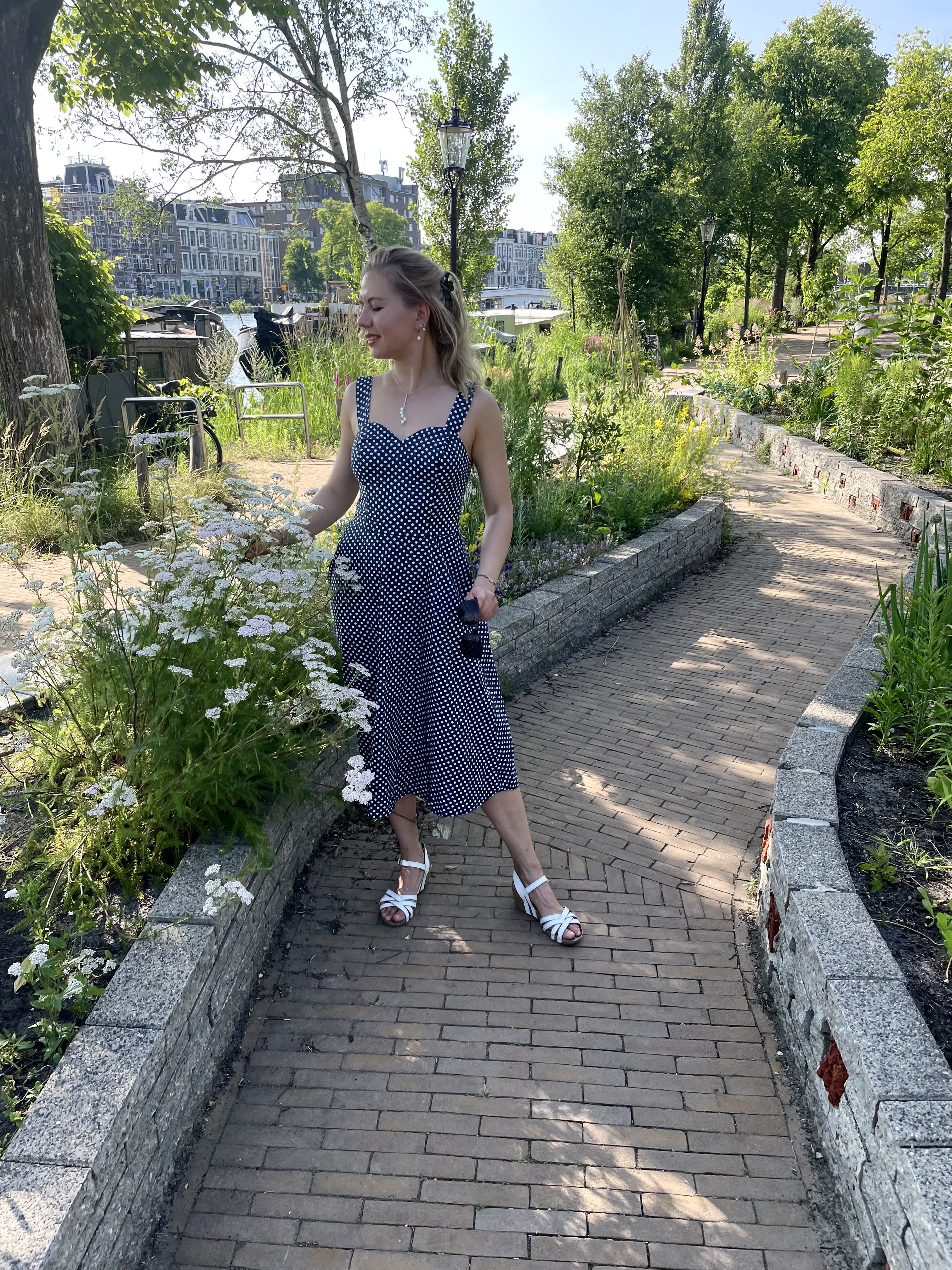
An elegant Amsterdam garden can still be green.
Sustainable garden design does not have to look wild, unfinished, or unkempt. A climate-adaptive garden can be crisp, architectural, and inviting. It can include a generous dining terrace, beautiful materials, layered planting, evening lighting, water-sensitive detailing, and year-round interest.
The goal isn't just to add more greenery. The goal is to improve the garden's visual, practical, and environmental qualities.
If you are considering adding a façade garden, removing paving, applying for subsidies, or redesigning your garden with a more thoughtful planting scheme, I would be happy to help you turn those ideas into an elegant, clear design.
Get in touch to discuss a garden design for your home in Amsterdam — practical, well-planted, and designed to last.